
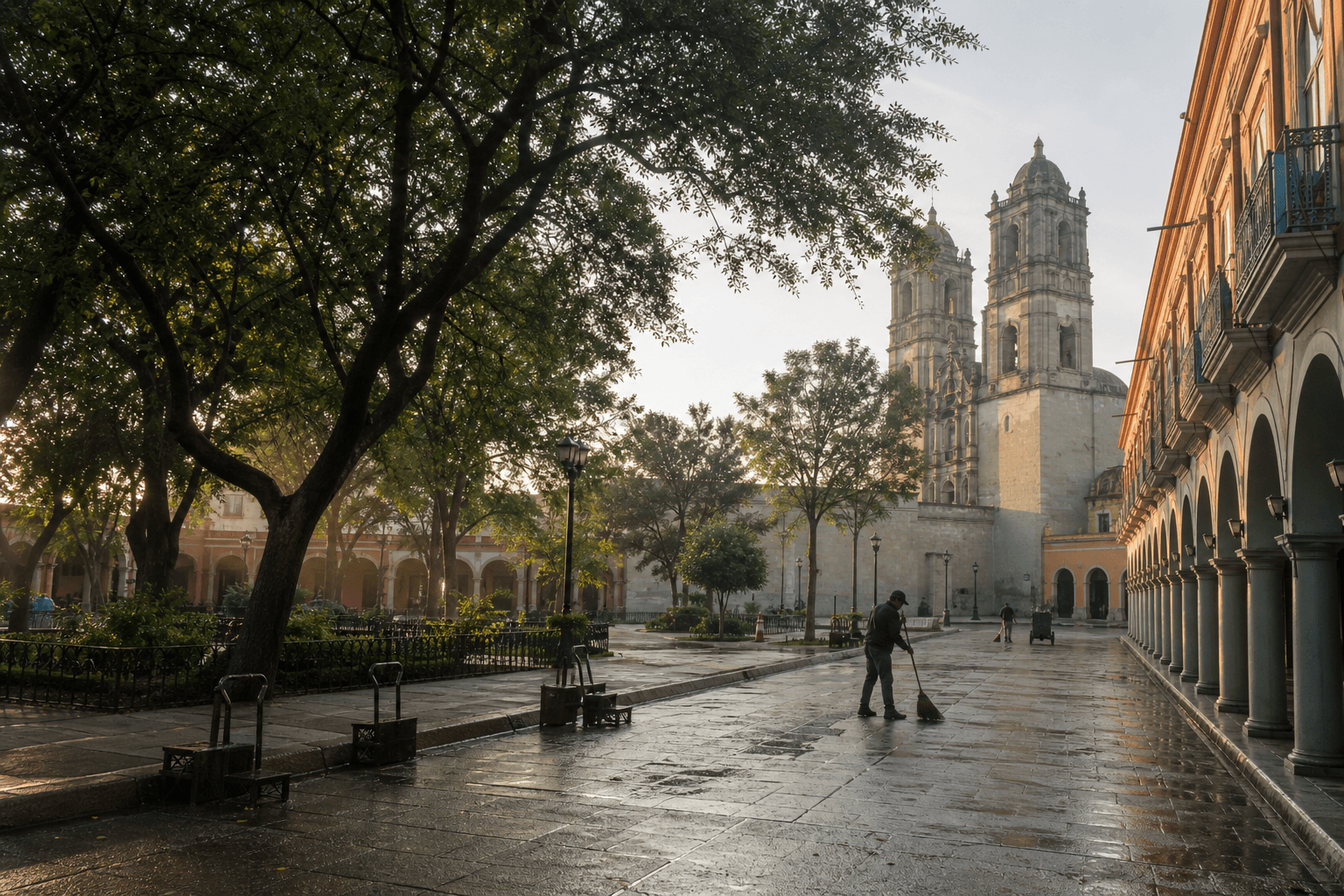
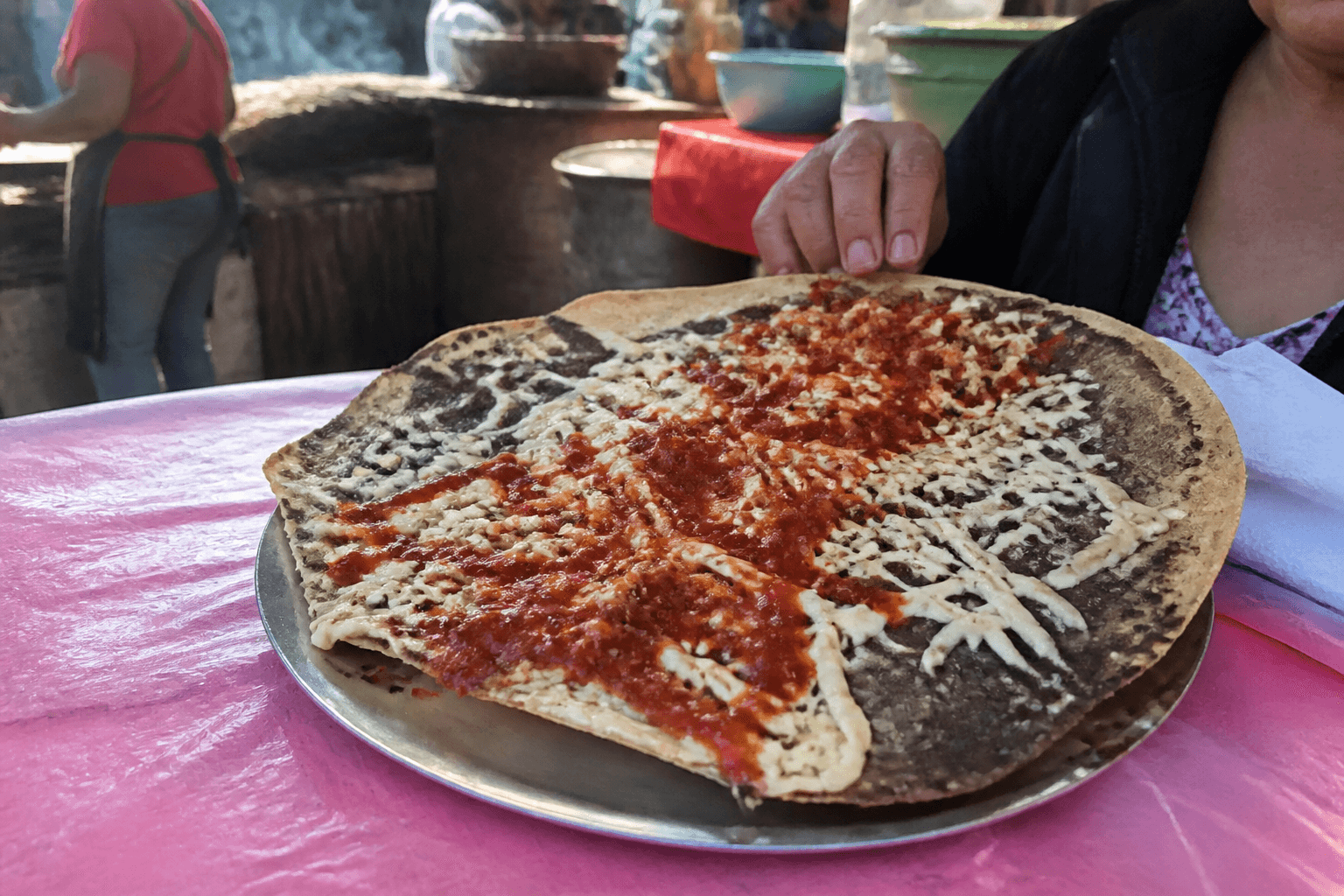
I keep thinking I should have flown. That's the thought you get at TAPO at half eleven, standing under the fluorescent tubes with a ticket that's still warm from the printer, watching a man wrap a whole rotisserie chicken in brown paper like it's a newborn. The ADO GL to Oaxaca was a third of the flight I checked in a hostel kitchen in Roma Norte on someone else's Wi-Fi, and the flight would have put me in the same city with none of the night in between. I can hear my father calling that a false economy. He isn't wrong. He also isn't the one trying to make four hundred thousand American dollars last ten years without turning into the kind of person who takes taxis for the principle of it.
A memory
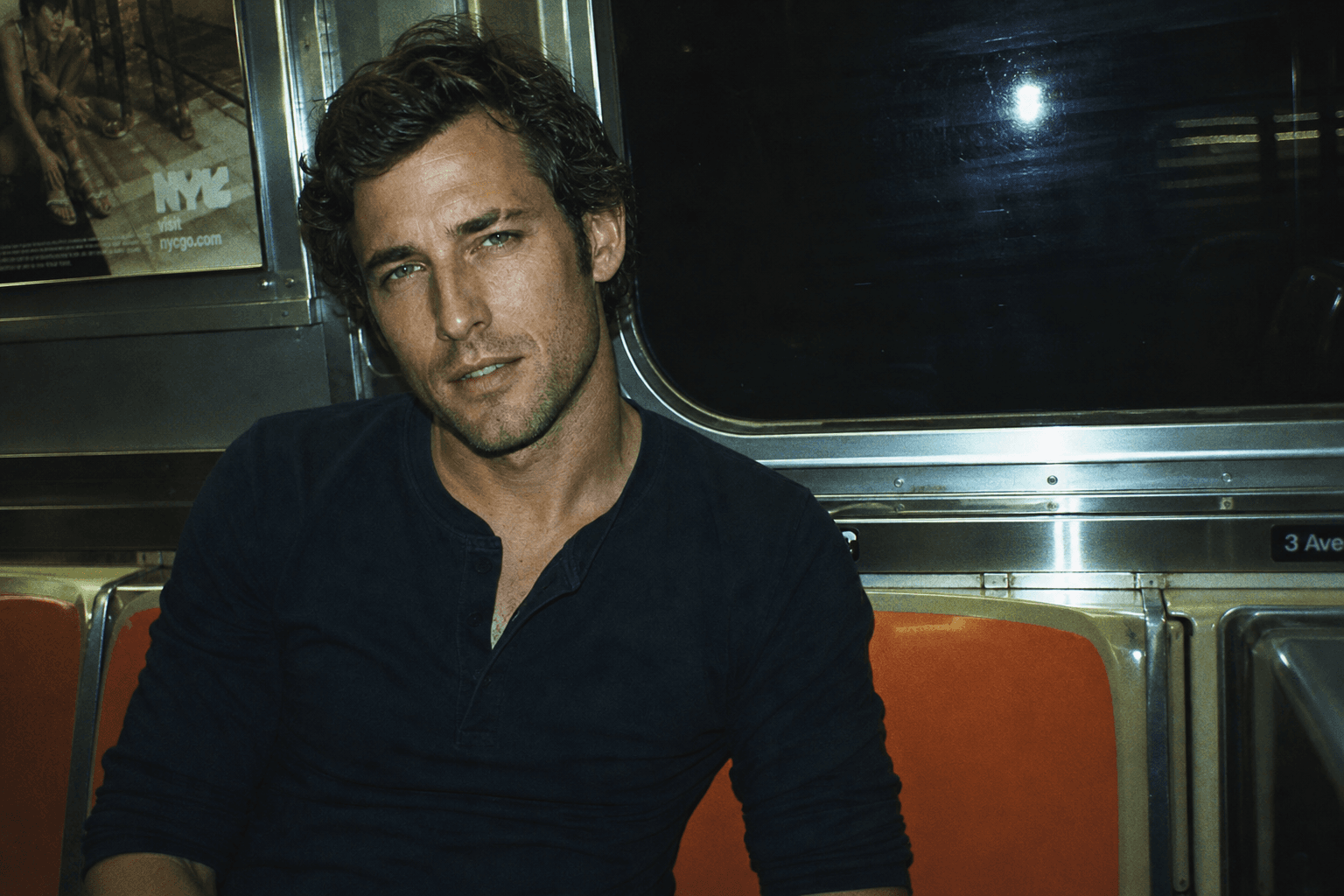
The bus smelled like lemon air freshener and oranges. Seat 14, window, upstairs. The seatbelt was a prop — it came out of the slot and then just stayed out, limp as a dead snake. I tucked it down the side and forgot about it. We rolled out of the east of the city in the kind of traffic that doesn't believe in night, past the big-box lights, and then, quite suddenly, into dark.
The woman in 13 had a bag of mandarins. Marisol. Going home to Tlacolula, which she said like I should already know where that is. I didn't. She peeled the fruit with her thumbnail and put halves on the little tray between us without asking, which is how you can tell someone has children, or used to. I said gracias about twelve times. She asked where I was from and I said Glasgow and she said Ah, fútbol, and I didn't have the Spanish to explain that I don't actually care about football, so I nodded. She taught me a word in Zapotec for the fruit. I wrote it phonetically in the back of the notebook and by the time the bus was climbing I couldn't read my own writing. That's on me.
Sleep came in twenty-minute lies. The highway south of Puebla is a long argument with the dark. Once, a town that was only a Pemex and a string of bulbs. Once, the smell of brakes. I woke up properly when the sky went the colour of dishwater over the hills, and Oaxaca was already happening underneath us — a basin of terracotta and pale concrete, the kind of place that looks like it has been lived in longer than it has been photographed.
The terminal at six in the morning is all men with trolleys and the particular quiet of people who have not yet decided to be awake. I took a taxi because the pack felt heavier than the map suggested. The driver had the radio on low, a voice talking about a protest I didn't understand. He dropped me two streets west of the cathedral, where Don Héctor — that's what he said to call him — lets a room by the night at the top of a green house with a door that sticks. The room is a bed, a chair, a nail for a bag, and a window onto a roof where someone has left a plastic chair facing the mountains like a joke that turned into a habit.